The Hierophant — Tarot Card Meaning
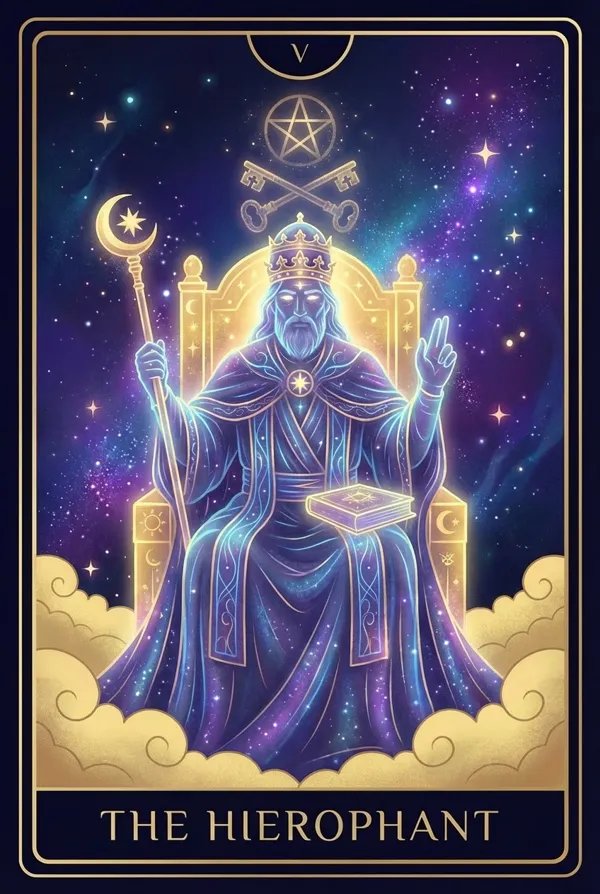
A teacher, a tradition, a structure that holds: The Hierophant asks what you believe, who taught you to believe it, and whether it still fits.
Overview of the Card's Meaning
The Hierophant is the fifth Major Arcana card, placed between The Emperor's worldly authority and The Lovers' personal choice. He represents systems we inherit — religion, education, family customs, professional ethics — and the comfort of belonging to something larger than ourselves. The card often appears when structure, mentorship, shared belief, or formal commitment matters. The Hierophant is not limited to one religion despite the Rider-Waite-Smith deck's papal imagery. In a modern reading, he can be a therapist, teacher, certification body, spiritual community, family tradition, or internal code of ethics. He opens a conversation between individual conscience and collective wisdom: when does a proven path support you, and when has respect quietly become conformity?
Symbolism and Imagery
The Hierophant sits between two stone pillars, echoing The High Priestess but making wisdom public rather than veiled. His triple crown and cross suggest authority across physical, mental, and spiritual realms. His hand is raised in blessing, distinguishing sanctioned teaching from The Magician's personal act of will. Two acolytes kneel in robes patterned with roses and lilies, showing passion and purity held within disciplined practice. Crossed gold and silver keys at his feet suggest access to outer and inner knowledge. The card was called The Pope in older European decks; the later name Hierophant comes from the ancient Greek official who revealed sacred things to initiates. Both histories emphasize transmission: knowledge moving through a trusted relationship and a shared tradition.
Upright Meaning
Upright, The Hierophant favors mentorship, established practice, and formal commitment. Following a proven process may serve you better than reinventing everything alone. This can mean studying with an experienced teacher, gaining a qualification, formalizing an agreement, or returning to a ritual that gives life shape. The card can describe a principled, conventional person who values consistency and doing things properly. At its best, this energy offers containment: a structure strong enough to support growth. Learn the rules and understand why they exist before deciding where adaptation is needed. Tradition is useful when it carries tested wisdom, not when it asks you to surrender discernment.
Reversed Meaning
Reversed, The Hierophant loosens the hold of convention. You may question an inherited belief, leave a rigid institution, choose informal education, or shape a relationship outside a familiar mold. This can be healthy individuation: respecting what you learned while no longer pretending it fits. It may also show rebellion for its own sake, or a teacher or group whose authority has become dogmatic and controlling. Examine both obedience and resistance. Which traditions steady you, which protect someone else's power, and which rules are you rejecting before understanding their purpose? Freedom is strongest when it is conscious rather than merely reactive.
Upright Keywords
Tradition, Mentorship, Commitment, Institutions, Shared belief, Learning
Reversed Keywords
Nonconformity, Restriction, Personal belief, Questioning dogma, Rebellion, Independence
In Love
If You Are Single
If you are single, The Hierophant can indicate meeting someone through friends, family, education, faith, or community — a person whose values and intentions are relatively clear. It often favors dating with long-term commitment in mind rather than keeping every possibility undefined. The shadow is choosing a partner to satisfy other people's picture of a suitable match. Notice whether your checklist reflects genuine compatibility or inherited expectations about status, identity, age, or how love should look. Reversed, the card can support an unconventional connection if both people communicate their values honestly.
If You Are in a Relationship
In an established relationship, The Hierophant often signals formalization: engagement, marriage, shared vows, moving in, or explicitly agreeing on a future. Rituals can deepen intimacy — weekly time together, family traditions, or practices that remind you what the partnership stands for. The card can also recommend couples counseling, premarital guidance, or advice from someone both partners respect. Reversed, conflict may center on religion, culture, family pressure, gender roles, or assumed relationship rules. Do not treat inherited expectations as agreements. Name what each person actually chooses.
About an Ex or Getting Back Together
Regarding an ex, The Hierophant can point to reconnecting through a shared community or revisiting the values that first held you together. Any healthy reunion would likely be deliberate and clearly defined rather than impulsive. Outside pressure from family or tradition may also be influencing the wish to reunite. Reversed, the breakup may reflect a values mismatch or suffocating expectations that remain unresolved. Ask whether you miss the person or the familiar structure the relationship gave you. Returning without renegotiating the old rules usually recreates the same friction.
In Career and Work
At work, The Hierophant favors established institutions, professional standards, credentials, and mentorship. It is strong for education, law, medicine, government, nonprofits, and other fields where training and ethical frameworks matter. Learning from a senior colleague and building credibility carefully can pay off more reliably than trying to bypass every system. Reversed, it may indicate frustration with bureaucracy, an outdated culture, or an employer whose stated values do not match its behavior. An unconventional path, independent work, or reform from within may be appropriate, but understand the practical consequences before rejecting a structure that still provides useful support.
In Money and Finances
Financially, The Hierophant supports conservative, transparent methods: a realistic budget, regulated institutions, qualified advice, and long-term planning. It is less enthusiastic about speculative trends or secret systems promising exceptional returns. Reversed, question inherited money beliefs that do not match your circumstances. Perhaps extreme caution prevents sensible investment, or family ideas about success keep you overspending for appearances. Alternative approaches can work, but freedom from convention is not freedom from due diligence.
What This Card Says About How Someone Feels About You
When The Hierophant describes someone's feelings, it often points to respect, seriousness, and compatibility with a stable future. They may see you as someone to introduce to family or build a recognized commitment with. The feeling is often steady and values-based rather than impulsively passionate. Reversed, they may be wrestling with family, cultural, or community expectations, or questioning conventional relationship timelines altogether. That is not automatically rejection, but it does mean affection and readiness for formal commitment are separate questions. Look for honest behavior rather than assuming respect guarantees action.
This Card as Advice
As advice, seek qualified guidance instead of solving everything alone. A teacher, counselor, elder, or established method may save you from avoidable mistakes. Practice humility long enough to learn what experience can offer. At the same time, engage tradition thoughtfully. Understand a rule before obeying or breaking it. The aim is informed choice — neither blind conformity nor automatic rebellion. Keep the structure that supports your values and revise the part that asks you to betray them.
Is This Card a Yes or a No?
For yes-or-no questions, The Hierophant leans yes when the question concerns commitment, marriage, education, certification, community, or an established route. It supports proceeding through recognized channels. If you ask about breaking convention or taking an untested shortcut, it is more cautious: seek guidance, understand the rules, and make sure resistance is grounded in values rather than impatience.
Combinations With Other Cards
With The Lovers, The Hierophant often points to formal commitment or a values-based choice about partnership. With The Emperor, institutional authority and clear hierarchy become central. Paired with Justice, contracts, licensing, ethics, or an official decision may matter. Beside The Devil, examine dogma, coercion, or loyalty maintained through fear. With The Fool, the reading highlights tension between a sanctioned path and personal experiment. The High Priestess contrasts public teaching with private knowing; together they ask you to balance learned wisdom and intuition. With the Three of Pentacles, apprenticeship and collaborative learning are especially favored.
This Card as Your Card of the Day
As your card of the day, consider where structure or guidance would genuinely help. Attend the class, keep the appointment, follow the procedure, or return to a grounding ritual. Doing something by the book may free energy for what actually requires creativity. Also notice which habits and beliefs came from parents, teachers, institutions, or culture. You do not need to reject or defend them today. Simply ask whether each one remains alive and useful, or survives mainly through fear of disapproval.
Common Misconceptions
The Hierophant is often reduced to organized religion, but its archetype includes education, therapy, professional codes, family custom, and any trusted tradition. Another mistake is assuming it always says to do the safe, expected thing. It asks for conscious engagement with structure, not automatic obedience. Reversed Hierophant is not simply bad, rebellious, or immoral. It can show healthy individuation and a personal spiritual path. Conversely, upright does not certify every authority as trustworthy. A title or institution deserves discernment, especially when it discourages questions.
Historical Background and Spiritual Depth
The word hierophant comes from Greek roots meaning someone who shows sacred things. In the Eleusinian Mysteries, the Hierophant was a senior ritual official who revealed teachings to initiates. Older Marseille decks called the card Le Pape, drawing directly on Catholic hierarchy familiar to European players. The Rider-Waite-Smith deck retained ecclesiastical imagery while expanding its esoteric meaning. In psychological readings, the card can represent the teacher or institution that provides a container for development. Its pairing with The High Priestess is useful: one transmits communal, articulated knowledge; the other guards private, intuitive knowing. Mature judgment needs access to both.
Self-Reflection Questions
Which of my beliefs were consciously chosen, and which were inherited without examination? Where would experienced guidance help me? Is there a tradition I resist out of pride, or one I keep from fear of standing apart? What structure would support the person I am becoming?
Frequently Asked Questions
What does The Hierophant mean in tarot?
The Hierophant represents tradition, mentorship, shared belief, and established systems. It often suggests learning from experience or following a recognized path thoughtfully.
Is The Hierophant a yes or no card?
It generally leans yes for marriage, education, certification, and established routes. For breaking convention or taking a shortcut, it advises caution and more guidance.
What does The Hierophant reversed mean in love?
It can indicate pressure from family or culture, disagreement about relationship rules, or a desire for a commitment that does not fit a conventional model.
Does The Hierophant mean marriage?
It can signify marriage or another formal commitment, but it does not guarantee one. The broader theme is making shared values and agreements explicit.
What is the difference between The Hierophant and The Emperor?
The Emperor represents personal authority and order; The Hierophant represents collective authority, inherited teaching, and institutions that extend beyond one person.
What does The Hierophant say about someone's feelings?
It often suggests respect, seriousness, and a sense that you fit their long-term values, though those feelings do not automatically guarantee formal commitment.
Why does The Hierophant look like a Pope?
Older European decks depicted The Pope. The Rider-Waite-Smith card retained that visual language to represent a sanctioned teacher, while the archetype can apply to many traditions and institutions.
Journaling Prompts
- List three beliefs about love, work, or success inherited from your upbringing. Which still feel true?
- Write about a mentor whose guidance you have resisted and what makes it difficult to receive.
- Where are you following a rule from habit rather than purpose?
- Design one ritual or code you would consciously choose for the coming year.
Related Cards
Start a Personal Reading · Today's Card · Explore the Full Library · Career Reading · Yes or No Reading