4 of Swords — Tarot Card Meaning
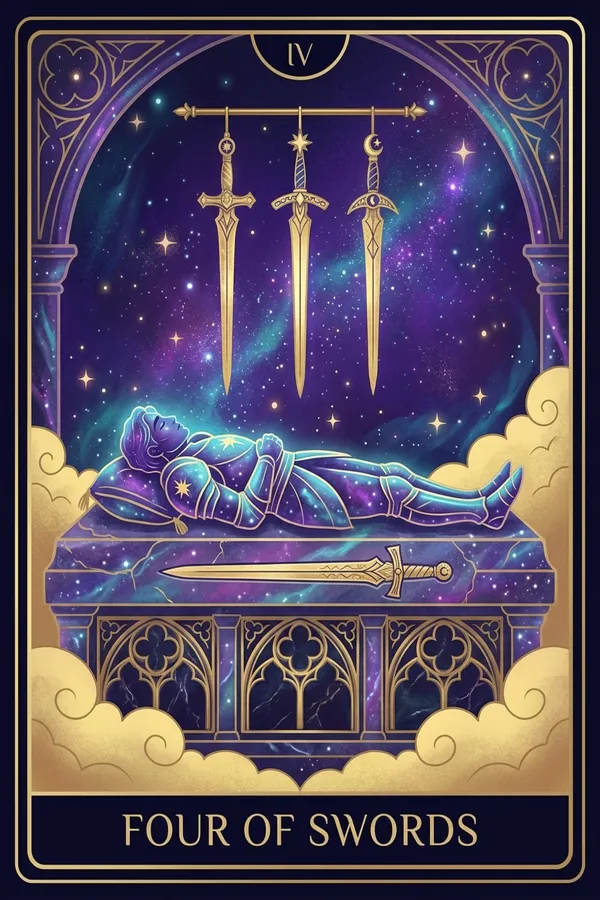
The 4 of Swords is deliberate rest. Not being sidelined and not illness — a chosen pause, with recovery understood as something you do rather than something you wait out.
Overview of the Card's Meaning
The 4 of Swords describes the decision to stop. It arrives when effort has stopped producing results and the honest next move is recovery rather than another attempt. This is the natural counterpart to the 9 of Swords. Where that card is the sleepless mind at three in the morning, this one is the quiet room afterwards. People who draw one have very often drawn the other recently. As a mirror, it asks what you have been refusing to pause. The card is not suggesting collapse; it is suggesting the sort of rest that is planned, protected and actually taken.
Symbolism and Imagery
A figure lies still on a tomb in a chapel, hands together, three swords hanging on the wall above and one resting beneath them. The posture is composed rather than defeated. The important detail is the single sword below: one thing is being carried, three have been set aside. This is selective quiet, not the end of thinking. A stained glass window shows a figure being blessed, colour entering the stone room. The setting is a sanctuary — somewhere entered on purpose and left again. Nothing in the image says permanent.
Upright Meaning
Upright, the 4 of Swords means rest, recuperation and stepping back. Sleep, silence, a few days without decisions, time away from the situation you have been examining continuously. It often follows a period of strain: illness recovered from, a conflict ended, a project delivered. The pause is earned and it is also necessary rather than optional. It can indicate retreat in a practical sense — a break, a holiday, medical leave, or simply a weekend genuinely protected. Recovery here is active work with a purpose, not absence of activity.
Reversed Meaning
Reversed, the 4 of Swords usually means rest refused or rest interrupted. Pushing on through exhaustion, or being unable to settle even when the opportunity exists. It can also mean the pause is ending: re-entry after a period out, energy returning, readiness to engage again. Sometimes it describes rest that has drifted into avoidance — a retreat that stopped being restorative some weeks ago. The reversal invites an honest look at which of those you are in.
Upright Keywords
Rest, Recovery, Deliberate pause, Retreat, Stillness, Recuperation
Reversed Keywords
Rest refused, Restlessness, Burnout, Re-entry, Avoidance, Interrupted recovery
In Love
If You Are Single
For single readers, this card often means a deliberate break from dating. Not resignation — a decision to stop performing while you recover. That pause is frequently more productive than it feels. People tend to make much better choices about relationships when they are not exhausted. It can also describe healing after something ended. The card's kindness is in saying that you are allowed to take the time, and that taking it is doing something.
If You Are in a Relationship
In a relationship, the 4 of Swords suggests peace rather than trouble. A quieter phase, less intensity, a pause after a period of difficulty. It can indicate a needed break from a repeating argument — stepping away from the subject rather than from each other, and returning when both of you have slept. Where one partner is unwell or depleted, it counsels patience and practical care. Presence matters more than conversation in this phase, and nothing needs to be resolved this week.
About an Ex or Getting Back Together
About an ex, this card generally advises distance for now. Not forever — for the length of time it takes for the subject to stop dominating your thinking. It often means a genuine lull in contact, and it reads that lull as helpful rather than ominous. If you are considering reaching out, the 4 of Swords suggests waiting until the urge is calm rather than raw. Decisions made from depletion tend to need making again.
In Career and Work
At work, the 4 of Swords is a fairly direct instruction: take the break. Use the leave, stop replying in the evenings, step back from the project long enough to see it. It frequently appears just before burnout becomes unavoidable, which is the useful moment to receive it. Rest taken now is much cheaper than rest taken later. It can also indicate a genuine lull — a quiet period between phases. Rather than filling it anxiously, the card suggests letting it be recovery, since the next phase will want you present.
In Money and Finances
Financially, this card suggests a pause on decisions. No new commitments while you are tired; nothing signed in the middle of a difficult stretch. It can describe a quiet period where nothing much moves, which is not stagnation. Sometimes the right financial action for a month is none. If money worry is what is keeping you awake, the practical step is a specific plan and then a defined rest from thinking about it. Continuous worry does not improve the numbers.
What This Card Says About How Someone Feels About You
As how someone feels about you, the 4 of Swords suggests someone who needs space rather than someone withdrawing from you. Their quiet is likely about their own capacity. They may be processing, tired, or recovering from something unrelated. The regard has not gone; it currently has very little energy available. Pressure here is counterproductive. Patience and low-demand warmth generally bring this person back much faster than requests for clarity do.
This Card as Advice
Stop, on purpose, before you are made to. Choose the rest rather than waiting for something to impose it — that difference is the entire card. Then make the rest real. Protect the time, put the swords on the wall, and let one thing remain rather than five. Recovery is doing something: sleep, food, daylight, quiet, the deliberate absence of decisions. And give it an end. This is a sanctuary, not a residence. Name roughly when you will re-engage, and rest without guilt until then.
Is This Card a Yes or a No?
The 4 of Swords is usually a not yet. Not a refusal — a matter of timing. Where the question is about pushing forward now, it leans no. Where the question is about taking a break, stepping back or postponing, it is a clear yes. The card's implication is that the answer will be different, and better, once you have recovered. It rarely rewards decisions made while depleted.
Combinations With Other Cards
With the 9 of Swords, the pairing is almost prescriptive: the sleepless mind and the deliberate rest belong to the same story, and the reading says stop before the cost compounds. Drawing both is common and worth taking literally. With the 10 of Wands or the 2 of Pentacles, the load has become unsustainable and rest is the corrective. Alongside the Star, recovery leads into genuine renewal. With the 8 of Wands or the Knight of Swords, the reading asks you to slow a pace that has become costly. Paired with the Chariot, the two together usually mean move after you have recovered, not instead of.
This Card as Your Card of the Day
As a card of the day, the 4 of Swords suggests doing less on purpose. Cancel one thing. Go to bed early. Leave a decision until tomorrow. It is a good day for quiet, solitary, restorative activity, and a poor one for confrontation or launching anything. If the day cannot be quiet, find twenty minutes that are. The card is satisfied with a genuine pause; it does not require an empty schedule.
Common Misconceptions
The most frequent misreading is that this card means enforced inactivity — illness, being sidelined, life happening to you. The truer reading is that the pause is necessary and very often chosen. The figure lies composed in a sanctuary; nothing has been done to them. The second mistake is treating rest as nothing. Recovery is an activity with a purpose, and it is what makes the next stretch possible. Reading this card as empty time misses its whole function. Third, people read it as a permanent state. Three swords are set aside and one remains — this is selective quiet, with an exit. Fourth, in relationship readings the silence is read as rejection, when it usually describes someone's depleted capacity rather than their feelings about you.
Historical Background and Spiritual Depth
In the Swords sequence, the suit of mind and language, the four follows the heartbreak of the Three and precedes the conflict of the Five. Its placement is a kind of mercy: after the wound, before the next demand, there is a room. Traditionally it was read as repose, exile, or convalescence, and older sources sometimes tilted it toward the tomb imagery and read it as loss. Contemporary readings emphasise recovery, which fits the picture better — the figure is resting, not buried, and the window is letting light in. Read as an inner figure, the 4 of Swords is the part of you that knows when to stop and is routinely overruled. Its counsel is unfashionable and almost always correct: you will think more clearly, decide more fairly, and recover more fully if you pause before you have to.
Self-Reflection Questions
Ask what you have been powering through, and how long you have been doing it. Then ask what genuine rest would look like specifically — not a vague intention to slow down, but which hours, and what you would set aside. Finally, notice whether you believe you are allowed to. That belief, rather than the schedule, is usually what is in the way.
Frequently Asked Questions
Does the 4 of Swords mean illness or being sidelined?
Usually not. It gets misread that way, but the truer reading is a necessary and often chosen pause. The figure lies composed in a sanctuary rather than having something done to them, and recovery here is an activity rather than empty time.
How does the 4 of Swords relate to the 9 of Swords?
They are natural counterparts. The 9 is the sleepless mind at three in the morning; the 4 is the quiet room afterwards. People who draw one have very often drawn the other recently, and together they read as: stop before the cost compounds.
Is the 4 of Swords a yes or no card?
Usually a 'not yet' rather than a no — a matter of timing. For questions about taking a break, stepping back or postponing, it is a clear yes. It rarely rewards decisions made while depleted.
What does the 4 of Swords reversed mean?
Often rest refused or interrupted: pushing on through exhaustion, or being unable to settle when the chance exists. It can also mean the pause is ending and energy is returning, or that a retreat has quietly become avoidance.
What does the 4 of Swords mean for feelings?
Someone who needs space rather than someone withdrawing from you. Their quiet is usually about their own capacity — processing, tired or recovering. Patience and low-demand warmth bring this person back faster than requests for clarity.
What does the 4 of Swords mean for work?
Take the break. It often appears just before burnout becomes unavoidable, which is the useful moment to receive it — rest taken now is far cheaper than rest taken later. It can also mark a genuine lull worth using as recovery.
What advice does the 4 of Swords give?
Stop on purpose before you are made to, make the rest real by protecting the time, and give it an end. This is a sanctuary rather than a residence — name roughly when you will re-engage, and rest without guilt until then.
Journaling Prompts
- What am I pushing through that would be easier after rest?
- What would a genuinely protected day look like, in specific hours?
- Which of my current thoughts are exhaustion rather than insight?
- What do I believe rest costs me, and is that true?
Related Cards
Start a Personal Reading · Today's Card · Explore the Full Library · Career Reading · Yes or No Reading