Knight of Swords — Tarot Card Meaning
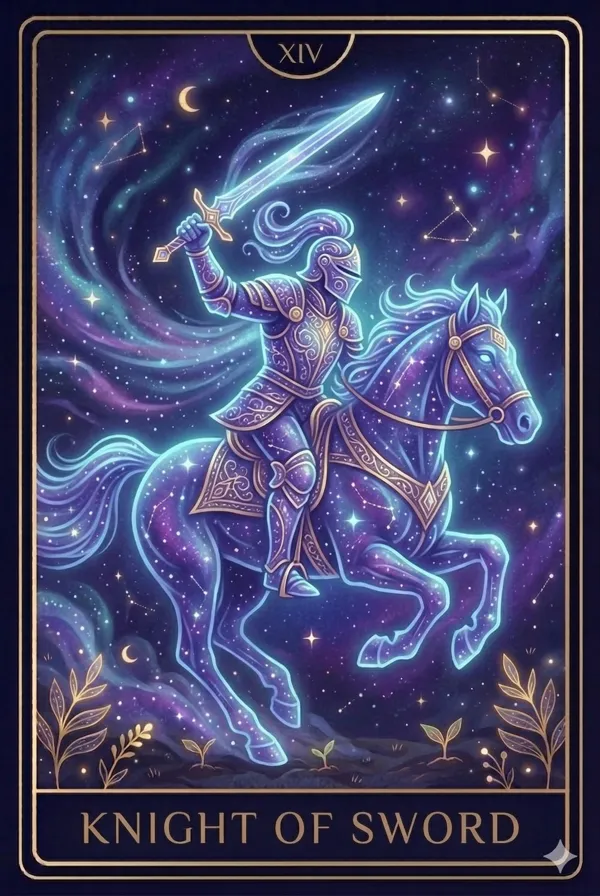
The Knight of Swords is speed and conviction. He is not so much aggressive as moving faster than he is thinking — admirable or reckless depending entirely on context.
Overview of the Card's Meaning
The Knight of Swords charges. He has an idea, he believes it, and he is already halfway across the field with it. That is the whole character, and it is far more useful than the 'angry man' reading he usually gets. His great virtue is that he acts. Where other figures deliberate, he moves — and some situations genuinely need someone willing to go first without complete information. His cost is proportional. Speed without pause skips consequences, alienates allies and occasionally arrives brilliantly at the wrong destination. As a mirror he asks whether your current pace is courage or avoidance of thinking.
Symbolism and Imagery
He rides a white horse at full gallop, sword raised, leaning so far forward that horse and rider are almost one line of motion. Nothing in the image is braking. The sky behind him is stormy and the trees bend hard in one direction — the wind is with him, which is part of the problem. Momentum feels like being right. Birds appear on his horse's harness, and butterflies on the bridle, both suggesting air: intellect, speech, ideas in flight. His armour is light rather than heavy. He is built for the charge, not for the siege.
Upright Meaning
Upright, this Knight means decisive action and rapid communication. Things move: messages sent, positions taken, conversations that get to the point in the first sentence. He is intellectually fearless. He will say the unpopular thing in the meeting and defend an idea he has held for eleven minutes with total sincerity. He often signals events accelerating, sometimes faster than is comfortable. Where a situation has been stagnant, he is welcome. Where it is delicate, he is a warning to check the pace before committing.
Reversed Meaning
Reversed, the speed becomes the problem. Words out before thought, plans launched without preparation, an argument won at the cost of the relationship it happened inside. It can also mean the charge has stalled — energy spent early, direction lost, a conviction abandoned as soon as it met resistance. Sometimes it describes someone using force of argument as a substitute for being right. The reversal asks what the hurry is actually protecting you from noticing.
Upright Keywords
Speed, Conviction, Directness, Decisive action, Courage, Fast communication
Reversed Keywords
Recklessness, Words before thought, Stalled momentum, Aggression, Impatience, Burnt bridges
In Love
If You Are Single
For single readers, this Knight can describe someone arriving fast — intense attention, quick declarations, plans made at speed. It is genuinely exciting and worth watching for follow-through. He can equally describe your own approach: pursuing directly, saying what you feel early, which some people find refreshing and others find alarming. The card's honest note is that this pace reveals little about durability. Enthusiasm arrives quickly and departs quickly. Give the situation enough time to show you what it is when the rush wears off.
If You Are in a Relationship
In a relationship, the Knight of Swords often signals a fast, sharp conversation. Not necessarily damaging — sometimes it is the honesty that clears months of drifting. He can describe arguments where both people are quick and articulate and neither is really listening. Precision used competitively rather than to be understood. His constructive form is initiative: making the plan, addressing the problem now rather than in a fortnight. The question is only whether you are moving toward your partner or simply moving.
About an Ex or Getting Back Together
About an ex, this Knight frequently indicates sudden contact — a message out of nowhere, direct and slightly urgent. It can also describe your own impulse to reach out and say everything at once. That impulse is real; acting on it tonight rarely improves the outcome. Where a conversation is genuinely needed, the card supports having it plainly and quickly. Where the drive is to be understood or vindicated, it counsels waiting until the urgency subsides.
In Career and Work
At work, this Knight is valuable and needs managing. He drives deadlines, cuts through debate, and makes things happen that would otherwise circle for a month. He favours pitching, launching, arguing a case and any role where speed is the advantage. Journalism, sales, emergency work, anything with a clock on it. His risk is skipped detail and bruised colleagues. The practical advice under this card is to move fast and re-read once before sending. Almost all of his damage happens in the last five seconds.
In Money and Finances
Financially, the Knight of Swords warns about fast decisions. Impulse purchases, quick investments, acting on a strong opinion formed rapidly. He can also be positive: dealing with a financial matter you have been postponing, making the call, closing the account, doing it today. The distinction is preparation. Where you already know the facts, his speed is efficiency. Where you do not, it is expensive.
What This Card Says About How Someone Feels About You
As how someone feels about you, this Knight indicates strong, immediate and openly expressed interest. They are not concealing it and probably could not. The feeling is real; its stability is unproven. This is early-stage intensity rather than settled attachment, and treating the two as identical is where people get hurt. It can also describe someone frustrated and wanting to have things out with you directly. Either way, they are unlikely to leave you guessing for long.
This Card as Advice
Move, but pause once first. One deliberate breath before sending, saying or committing will keep almost everything valuable in this card and remove most of its cost. Ask whether you are acting or reacting. Both feel urgent; only one of them tends to look right a week later. And notice the effect of your speed on other people. Being fast and correct is not the same as being effective. The charge works best when someone is still willing to ride with you afterwards.
Is This Card a Yes or a No?
The Knight of Swords is a yes, and a fast one — often faster than expected. The qualification is that he says little about whether the outcome lasts. He answers 'will this move?' more reliably than 'will this work?' On questions needing patience, care or delicacy, treat his yes with caution. He is not the card of the well-considered decision.
Combinations With Other Cards
With the Eight of Wands, everything accelerates — news, travel, decisions landing quickly. Alongside the Ace of Swords, a truth is spoken and acted on almost simultaneously. With the Four of Swords, the pairing is a direct instruction: slow down before this costs you. Next to the Two of Swords, he ends the hesitation, possibly before it was finished being useful. With the King of Swords, expect the difference between conviction and judgement to matter. Paired with the Tower, the speed meets consequences it did not plan for, and the lesson usually concerns pace rather than direction.
This Card as Your Card of the Day
As a card of the day, the Knight of Swords suggests acting on the thing you have been circling. Send it, ask it, start it. It is a good day for directness and a poor one for delicate diplomacy. Expect conversations to move quickly. The one discipline worth keeping: read it once more before it leaves your hands.
Common Misconceptions
The main misreading is that this Knight is an aggressive or combative person. He is more accurately someone moving faster than they are thinking. That can be admirable — the person who acts while everyone else deliberates — or reckless, and context decides which. The second mistake is treating his speed as certainty. Conviction is not evidence. He believes what he is saying entirely, which tells you about his sincerity rather than about whether he is right. Third, people read him as a warning against action. He is far more often an invitation to act with one deliberate pause added. And fourth, in love readings he is read as a promise of intensity that lasts. The intensity is genuine; the durability is a separate question the card does not answer.
Historical Background and Spiritual Depth
The Knights sit between Pages and Queens: learning has happened, mastery has not. Each carries their suit's element at its most active, and the Knight of Swords carries air at full speed — thought converted into motion with very little friction between them. Traditionally he was read as a bringer of conflict or sudden news, sometimes as a young man of great courage and poor judgement. That double reading has survived because both halves are accurate. Modern readings tend to treat him developmentally: the stage where conviction outruns discernment, which everyone passes through and which is not shameful. Read as an inner figure, he is the impulse that says now, immediately — worth listening to and worth making wait a single beat.
Self-Reflection Questions
Ask what you are rushing, and what you would notice if you slowed it by a day. Then ask whether your certainty comes from information or from momentum. The two feel identical and are not. Finally, consider who is affected by your pace, and whether you have asked them.
Frequently Asked Questions
Is the Knight of Swords an aggressive card?
Not usually. He is better read as someone moving faster than they are thinking, which can be admirable or reckless depending on the situation. Reading him as simply combative misses the courage in him and the reason people follow him.
Is the Knight of Swords a yes or no card?
A yes, and often a faster one than expected. The qualification is that he answers 'will this move?' more reliably than 'will this last?' — for questions needing patience or delicacy, treat his yes carefully.
What does the Knight of Swords reversed mean?
Speed becoming the problem: words out before thought, plans launched unprepared, arguments won at the expense of the relationship. It can also mean the charge has stalled — energy spent early and conviction abandoned at the first resistance.
What does the Knight of Swords mean for feelings?
Strong, immediate and openly expressed interest — they are not hiding it. The feeling is genuine, but this is early intensity rather than settled attachment, and treating those as the same thing is where people get hurt.
Does the Knight of Swords mean an argument?
Sometimes, though often it is a fast and sharp conversation rather than a fight — occasionally the honesty that clears months of drifting. The risk is two articulate people being precise at each other rather than listening.
What does the Knight of Swords mean for work?
Momentum: deadlines driven, debate cut short, things happening that would otherwise circle for weeks. He suits pitching, launching and any role with a clock on it, and his cost is skipped detail and bruised colleagues.
What advice does the Knight of Swords give?
Move, but pause once first. One deliberate breath before sending or committing keeps almost everything valuable in this card and removes most of its cost. Then ask whether you are acting or reacting.
Journaling Prompts
- What am I hurrying, and what am I avoiding by hurrying it?
- Is my certainty here built on information or on momentum?
- What would one deliberate pause change about how I handle this?
- Who is having to keep up with me, and have I noticed?
Related Cards
Start a Personal Reading · Today's Card · Explore the Full Library · Career Reading · Yes or No Reading